Andrea Secchi
Born in Colle di Val d’Elsa (Siena), Andrea Secchi graduated with honors and special mention in Piano from the Luigi Cherubini Conservatory of Florence. He has won over twenty national and international competitions, receiving special prizes for the best interpretation of works by Bach, Mozart, Schubert, Schönberg, and Beethoven. He also boasts extensive experience in the opera repertoire.
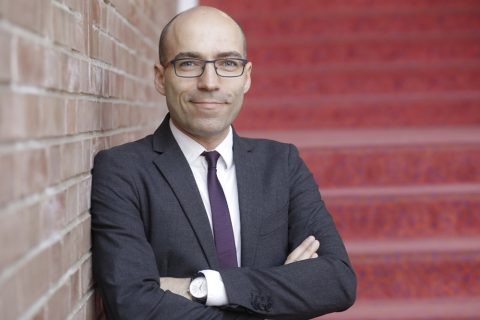
From 2006 to 2013, he served as Associate Chorus Master at the Maggio Musicale Fiorentino, a role that allowed him to collaborate with some of the world’s most renowned conductors, including Zubin Mehta, Seiji Ozawa, Lorin Maazel, Riccardo Chailly, and Semyon Bychkov. Between 2013 and 2017, he was Répétiteur and Associate Chorus Master at the Den Norske Opera & Ballett in Oslo.
As a vocal coach and répétiteur, he was invited to the Vienna State Opera and the Teatro Regio di Torino, where he took on the role of Chorus Master in 2018. At the Teatro Regio, he conducted and prepared numerous major opera titles alongside lesser-known works, such as Korngold’s Violanta and Paër’s Agnese (a production awarded the Abbiati Prize), as well as symphonic masterpieces ranging from Brahms’s Ein deutsches Requiem and Mendelssohn’s Elijah to Rossini’s Stabat Mater and Verdi’s Quattro pezzi sacri, working alongside conductors including Riccardo Muti, Gianandrea Noseda, Fabio Luisi, and Daniele Gatti, as well as collaborating with the RAI National Symphony Orchestra.
Since the 2023–24 season, Andrea Secchi has been the Chorus Master of the Coro dell’Accademia Nazionale di Santa Cecilia. Among the numerous concerts and tours undertaken with the Santa Cecilia ensemble—with repertoire spanning from Baroque to contemporary music—notable highlights include the productions of Verdi’s Messa da Requiem and Ponchielli’s La Gioconda, partnering with Antonio Pappano at the 2024 Salzburg Easter Festival, as well as, under the baton of Daniel Harding, Puccini’s Tosca (recorded live for Deutsche Grammophon), Mahler’s Second and Third Symphonies, and Schumann’s Scenes from Goethe’s Faust.